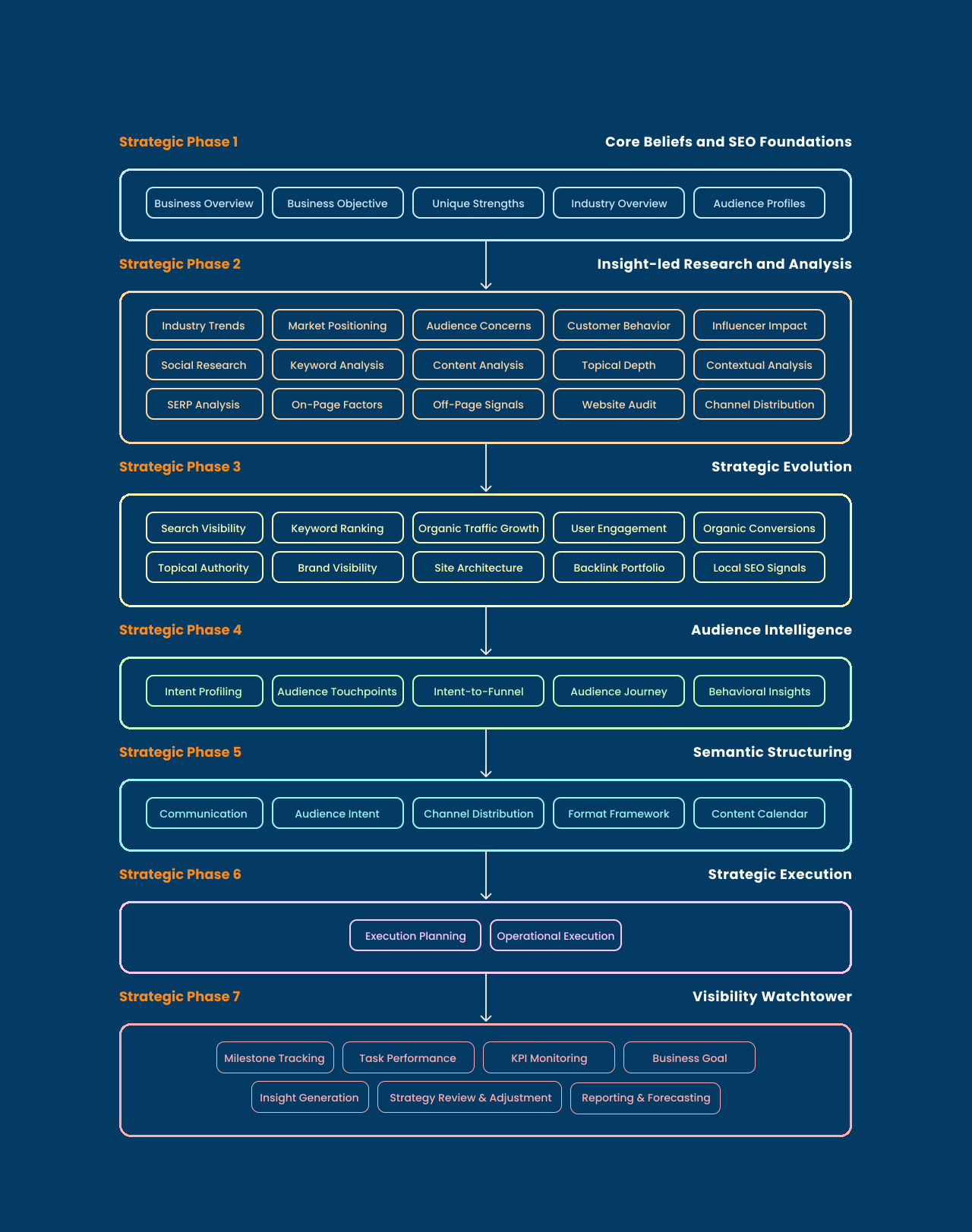
A Strategic Framework for Strategic Evolution
Inbound Connections
This phase is directly activated by the intelligence gathered in Phase 2. It takes the Keyword Frameworks, Topical Maps, SERP Opportunities, and Market-Positioned Narratives as its primary inputs, using them as the evidential basis for every strategic decision.
Phase At-a-Glance
To transform analytical insights into a structured, measurable, and "living" strategic plan where every action is tied to a specific, trackable objective.
view_quilt Pillars
Strategy Template
SEO Objective Pillars
check_circle Problems Solved
Ends the execution of random SEO tasks that have no clear purpose.
Provides a clear system to track what worked, what didn't, and why.
Transforms SEO from a cost center into a predictable, ROI-driven business function.
Where Insight Becomes Momentum
You've done the research. You have the intelligence. But what do you do with it? This is where many well-intentioned SEO campaigns falter. They create a static plan based on a snapshot in time and then execute it blindly for months, regardless of what the real-world data shows. The plan becomes a rigid checklist, not a living strategy.
Welcome to Phase 3 of the RuledSEO Framework: Strategic Evolution.
This phase is the connective tissue between the analytical clarity of Phase 2 and the tactical execution of Phase 6. It introduces a disciplined, dynamic system for building strategies that are reviewed, adjusted, and evolved over time. Here, we don't create one-off "campaigns"; we build a traceable system of strategies, each with its own goals, milestones, KPIs, and review cycles. This is how SEO becomes measurable, auditable, and truly agile.
SEO Objective
This is your long-term strategic theme, such as "Improve Search Visibility" or "Grow Organic Conversions". Each objective is tied to a larger business goal and can be pursued by one or more individual strategies.
Strategy ID
Every strategy is assigned a unique identifier (e.g., SV-2025.01). This ID is crucial for tracking the insight the strategy was based on, the milestones completed, the KPIs targeted, and the performance history over time. It creates a log of institutional learning.
Insight
Every strategy must originate from a meaningful insight discovered in Phase 2. Was it a gap in competitor content? A pattern in user behavior? An anomaly in ranking trends? Documenting the insight gives the strategy its purpose.
Strategy Goals
Each strategy has a specific, time-bound goal. For example, "Increase organic CTR by 15% for the top 10 commercial pages within 60 days." This goal must be Specific, Measurable, Achievable, Relevant, and Time-bound.
Milestones vs. Tasks
This is a critical distinction.
- Tasks are the actions your team performs (e.g., "write 5 meta descriptions," "upload article to CMS").
- Milestones are the results-oriented checkpoints that signify a completed outcome (e.g., "Meta descriptions optimized for 5 key service pages," "Article successfully published and indexed"). Focusing on milestones ensures you are tracking progress, not just activity.
KPIs to Monitor
We track KPIs at every level: the specific strategy (e.g., CTR, average position), the SEO Objective (e.g., visibility score), and the business itself (e.g., organic conversions, revenue).
Review Cadence & Adjustments
Strategies are not "set and forget." A scheduled review cadence is used to assess if KPIs are improving and if the original insight still holds true. Based on the review, a strategy can be evolved, refocused, or retired.
Search Visibility Positioning
This objective aims to improve the presence of your content across SERPs by increasing keyword coverage and ranking visibility. It's about showing up in more places for more relevant queries.
Business Goal Alignment
Increases brand discovery and generates qualified inbound opportunities by ensuring your brand is present when potential customers are searching.
Suggested KPIs
Impressions, average keyword position, number of ranking pages, and overall visibility share.
Keyword Performance
This focuses on improving the efficiency of the keywords you already rank for by better aligning them with user intent and optimizing the corresponding landing pages.
Business Goal Alignment
Improves lead-to-visit efficiency and relevance by ensuring the traffic you attract has a higher probability of converting.
Suggested KPIs
Click-Through Rate (CTR), bounce rate on keyword entry pages, and keyword-to-landing-page relevance scores.
Organic Traffic Growth
This objective is focused on attracting more visitors from search engines, typically by scaling high-quality content coverage and ranking for more high-value keywords.
Business Goal Alignment
Drives scalable lead generation and customer acquisition through organic channels, reducing reliance on paid media.
Suggested KPIs
Organic sessions, unique visitors from organic, new vs. returning user ratios, and year-over-year organic growth percentage.
User Engagement
This objective aims to deepen user interaction on your site by encouraging content exploration and reducing signals of dissatisfaction like bounces or pogo-sticking.
Business Goal Alignment
Enhances the on-site user experience to build audience trust and increase visitor retention, which are leading indicators of brand loyalty.
Suggested KPIs
Average session duration, scroll depth, bounce rate, and pages per session.
Organic Conversions
This is the critical objective of turning organic visitors into leads, signups, or sales by meticulously aligning user journeys with clear conversion actions.
Business Goal Alignment
Directly increases revenue or lead generation from unpaid channels, providing the clearest possible demonstration of SEO ROI.
Suggested KPIs
Goal completions from organic traffic, organic conversion rate, assisted conversions from organic, and revenue per organic visit.
Topical Depth & Authority
This objective strengthens your content's comprehensiveness and semantic coverage within key subject areas, establishing your website as a definitive resource.
Business Goal Alignment
Builds domain expertise and positions your brand as the go-to solution provider in your industry, fostering trust and preference.
Suggested KPIs
Topical content depth scores, internal linking relevance, number of featured snippets won, and semantic keyword coverage.
Backlink Portfolio Growth
This focuses on acquiring high-quality links from authoritative domains to boost your site's credibility, trust, and SERP positioning.
Business Goal Alignment
Strengthens domain authority and trust, making your site more competitive in crowded and high-value search landscapes.
Suggested KPIs
Number of referring domains, Domain Authority (or similar metric) trends, backlink velocity, and anchor text diversity.
Strategic Outcome
A System for Predictable Growth
By embracing this phase, you gain strategic traceability. You know what was attempted, the insight it was based on, and its outcome. Your SEO execution becomes smarter because every team member operates with goal clarity and a direct feedback loop. Most importantly, your SEO becomes a systematized, reliable driver of business growth, not a personality-driven or instinct-based function. You unlock the ability to deliver predictable performance.
Next Step: From Strategic Plan to Human Connection
You now have a playbook of strategic objectives and a methodology for building measurable, agile strategies. You have the blueprint for what needs to be done.
But who, exactly, is this strategy for? How do you ensure every piece of content you create from this plan resonates deeply with the real people you need to reach, at every stage of their journey?
This is the critical purpose of the next phase. It’s where we humanize our data, transforming our strategic goals into empathetic, audience-aligned journeys that connect with users from their first search to their final conversion.
Ready to connect your strategy to real human beings? Let's build your audience intelligence.