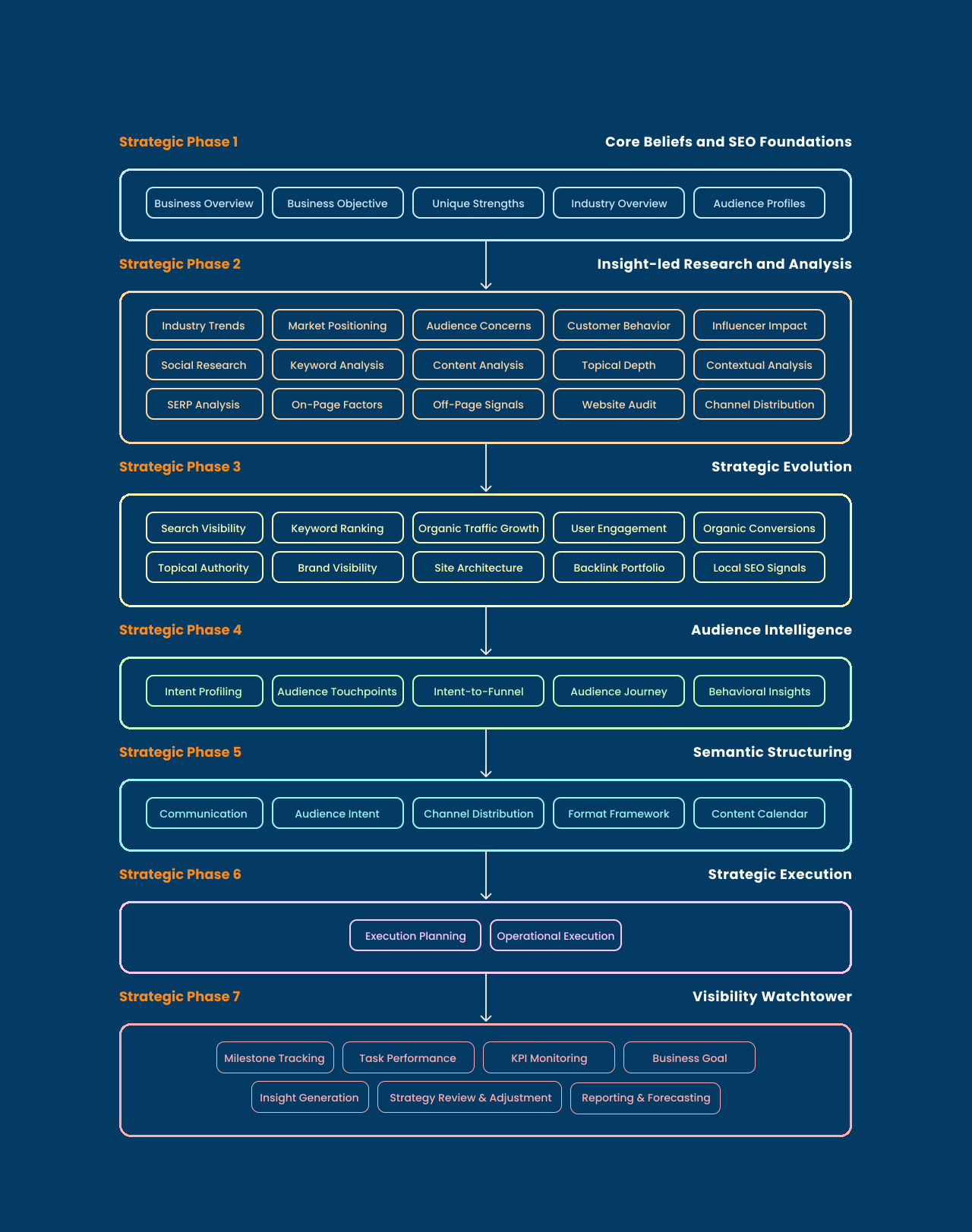
A Framework for Audience Intelligence
Inbound Connections
This phase takes the defined Strategic Objectives and SMART Goals from Phase 3 as its primary input. It uses this strategic direction to ensure that every audience journey we map and every piece of intent we analyze is directly aligned with the goals of the business.
Phase At-a-Glance
To transform audience data into actionable, empathetic journeys. This phase humanizes your strategy, ensuring every effort is aligned with how real people think, behave, and buy.
view_quilt Pillars
Intent Profiling
Unique Strengths
Industry Overview
Audience Profiles
check_circle Problems Solved
Stops the creation of generic content by focusing on specific user needs at each stage.
Fixes the "high traffic, low conversion" problem by aligning content directly with user intent.
Provides a clear blueprint for what content to create for each step of the customer journey.
The Strategic Bridge Between Data and People
You have a powerful, measurable strategic plan. You know what you need to achieve for the business. But there is a final, critical layer of alignment required before you write a single word: audience alignment. A brilliant strategy aimed at the wrong person—or the right person at the wrong time—is destined to fail.
Welcome to Phase 4: Audience Intelligence.
This is not about creating simplistic, static personas that sit in a folder. This is the strategic bridge between your research and your execution. It’s where we humanize data, mapping the complex journeys of real people and aligning their needs with your business goals. While most SEO focuses on the "what" (keywords), this phase focuses on the "who" and the "why." This deep, empathetic understanding ensures that your content is not just discoverable, but deeply resonant and effective.
By completing this phase, you are building a rare and powerful capability: a truly audience-aligned SEO strategy that connects with users on a human level, guiding them seamlessly from their first question to their final purchase.
Intent Profiling
This pillar is dedicated to identifying the dominant search intent behind every major keyword cluster and topic opportunity. We move beyond just knowing what people search for, to understanding why they search for it. We categorize intents into clear types: informational (I want to learn), navigational (I want to find), transactional (I want to buy), and commercial investigation (I want to compare).
Why It Matters
Mismatching your content's purpose with the user's intent is the number one cause of high bounce rates and low conversions. If a user has an informational intent, showing them a hard sales page will cause them to leave immediately. This pillar ensures that every piece of content you create is a perfect match for the user's mindset at that exact moment.
How it works
This process starts by classifying the dominant search intent (informational, navigational, transactional, or commercial investigation) for every key topic. By moving past the keyword itself to understand the user's underlying motivation—the why behind the search—it becomes possible to create content that perfectly aligns with their need at that moment. This systematic alignment ensures that users seeking to learn are not met with a hard sales pitch, which dramatically improves engagement and conversion rates by eliminating the primary cause of high bounce rates.
Audience Touch Points
This pillar focuses on mapping out all the channels, devices, formats, and moments where your target audience engages with information, both online and offline. This includes search engines, social media platforms, industry forums, product review sites, podcasts, and even in-person events.
Why It Matters
Your audience's journey doesn't happen exclusively on Google. Understanding the entire ecosystem of touchpoints gives you clarity on where to deploy your SEO efforts for maximum impact. It reveals how to position content effectively across different platforms and how different channels can work together to support the user's journey.
How it works
This pillar works by creating a holistic map of all online and offline channels—from search engines and industry forums to social platforms—where the target audience interacts with information. The underlying principle is that the customer journey is rarely confined to a single platform. This strategic view identifies the entire ecosystem, enabling the deployment of core SEO assets (like in-depth guides) and the distribution of smaller, native pieces of content tailored for each specific touchpoint. The result is an integrated approach that drives highly qualified traffic by meeting the audience where they are.
Intent-to-Funnel Alignment
Here, we connect the dots between the user's search intent and their stage in the marketing funnel (Awareness → Consideration → Decision). This pillar involves building a clear framework or a visual map that connects specific types of keywords and questions to each funnel stage.
Why It Matters
This alignment allows your SEO team to prioritize topics and keywords based on their strategic impact. Need to build brand awareness? Focus on top-of-funnel informational content. Need to drive immediate sales? Prioritize bottom-of-funnel transactional content. This ensures SEO efforts are always serving a specific, strategic business need.
How it works
This step establishes a critical link between the classified user search intent and the traditional marketing funnel stages (Awareness, Consideration, Decision). It functions by building a clear framework that connects specific types of keywords and audience questions to their respective funnel stages. The thinking here is to strategically prioritize content creation: focus on informational content for brand awareness needs (Top-of-Funnel) and on transactional content for immediate sales needs (Bottom-of-Funnel). This systematic alignment ensures every SEO effort is directly tied to and serves a specific, measurable business objective.
Audience Journey Mapping
This pillar takes the funnel alignment a step further by developing a narrative arc of the audience’s movement from Top-of-Funnel (ToFu) to Middle-of-Funnel (MoFu) and Bottom-of-Funnel (BoFu). We highlight the specific content, channels, and SEO triggers that guide users from one stage to the next.
Why It Matters
A journey map transforms a static funnel into a dynamic story. It ensures you create a cohesive content experience where each piece logically leads to the next, seamlessly guiding the user from their initial problem to your solution. It incorporates both the emotional and informational needs of the audience at each step.
How it works
This pillar operates by transforming the linear marketing funnel into a dynamic, cohesive narrative arc. It meticulously maps the movement of the audience from Top-of-Funnel (ToFu) through Middle-of-Funnel (MoFu) to Bottom-of-Funnel (BoFu), identifying the specific content assets and calls-to-action required at each transition point. The core mechanism is to ensure a seamless content experience: a ToFu piece must have a clear, logical pathway to the next MoFu piece, which then leads directly to the BoFu conversion asset. This approach nurtures the user through their entire decision-making process by logically anticipating and meeting their informational and emotional needs at every step.
Behavioral Insights Sync
This is an optional but highly recommended pillar where we integrate real behavioral signals from your existing analytics, heatmaps, user session recordings, customer surveys, and CRM data.
Why It Matters
This data allows you to validate or invalidate your hypotheses about audience behavior. Are users actually engaging with the content you thought was important? Are they getting stuck somewhere in the journey? These real-world insights deepen the authenticity of your personas and their mapped journeys, allowing you to identify and fix content gaps or conversion friction with precision.
How it works
This pillar serves as a critical validation loop by integrating real-world behavioral signals from existing analytics, heatmaps, session recordings, and CRM data. It works to either confirm or challenge the assumptions made during the preceding mapping and profiling stages. By analyzing how users actually interact with the content—where they click, where they get stuck, and which assets they ignore—the framework gains authenticity. This precision allows the team to pinpoint exact content gaps and conversion friction points for targeted, data-driven optimization.
Strategic Outcome
A Blueprint for Empathetic Content
By completing the Audience Intelligence phase, you have achieved a rare level of clarity. You no longer see your audience as a collection of data points, but as real people on a complex journey. You have a blueprint that ensures every piece of content you create is purpose-driven, funnel-aware, and intent-aligned. You are ready to move from analysis and strategy to the structuring of truly effective, empathetic communication.
Next Step: From Audience Journeys to Content Blueprints
You have a deep, empathetic understanding of your audience and a clear map of their journey. You know who you're talking to and why it matters to them at each stage. But what is the best way to structure your content to meet their needs? How do you choose the right format, the right channel, and the right timing?
This is the purpose of the next phase. It’s where we take your audience intelligence and use it to design a precise communication blueprint and an SEO-aligned content calendar.
Ready to design content that resonates perfectly with your audience? Let's start structuring your communication.